Addiction Treatment Resources in Manhattan and NYC

New York City offers diverse addiction treatment options — from outpatient programs to community recovery centers — helping residents achieve lasting recovery.

springhill wellness ny
Spring Hills Wellness
Addiction Treatment Resources in Manhattan and NYC

Finding the Right Help in the City That Never Sleeps

In a city as fast-paced and diverse as New York, addiction treatment isn’t one-size-fits-all. Between the constant movement, career pressures, and the cultural mix of Manhattan, finding the right support can feel overwhelming — but recovery here is absolutely possible. New York City offers some of the nation’s most advanced outpatient programs, detox centers, and community-based recovery resources, all designed to meet people where they are in their journey.

Understanding Addiction Treatment in Manhattan

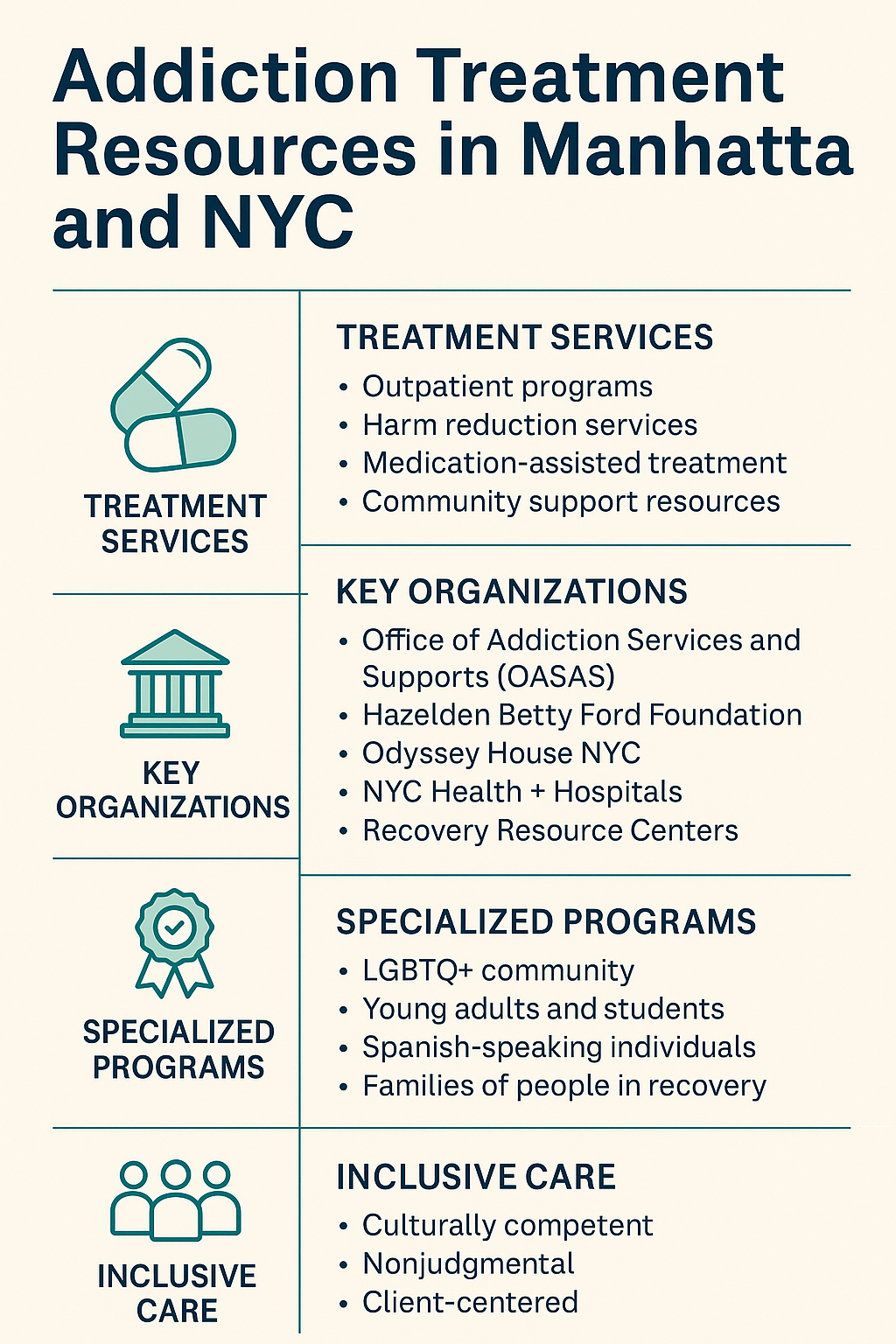
Addiction is both a medical and behavioral condition, and Manhattan treatment centers approach it through evidence-based care. Many programs use a holistic model — combining medical detox, therapy, medication-assisted treatment (MAT), and ongoing recovery support.
Reputable institutions such as Mount Sinai Behavioral Health, NewYork-Presbyterian, and Odyssey House NYC provide specialized care for substance use and co-occurring disorders, ensuring treatment plans are tailored to each client’s unique situation.

For those managing both mental health and addiction challenges, dual-diagnosis programs integrate therapy for depression, anxiety, trauma, and PTSD — issues that often accompany substance use.
Outpatient and Community-Based Treatment Options

Not everyone requires residential rehab. For working professionals, students, or parents, outpatient treatment programs in Manhattan and the surrounding boroughs allow flexibility while still maintaining structured recovery.
Programs like Spring Hill Wellness, Wholeview NYC, and the New York Center for Living offer Intensive Outpatient Programs (IOP) that balance therapy, support groups, and medication management.

Community-based resources — including OASAS-approved facilities and Overdose Prevention Centers — also provide accessible care. These locations distribute naloxone, fentanyl test strips, and harm-reduction tools that save lives while connecting individuals to longer-term recovery options.

Key Organizations Supporting Recovery in NYC

Several key organizations play a vital role in supporting addiction recovery across New York City, offering a mix of clinical care, housing, education, and peer support. The Office of Addiction Services and Supports (OASAS) oversees all licensed treatment providers throughout New York State, ensuring that facilities meet professional standards and provide evidence-based care. The Hazelden Betty Ford Foundation offers both in-person outpatient services and virtual addiction treatment programs, giving clients flexibility and accessibility.

Odyssey House NYC focuses on providing comprehensive care that includes housing, detox services, and structured outpatient rehabilitation — helping clients rebuild stability and independence. Meanwhile, NYC Health + Hospitals delivers public addiction and harm reduction services for New Yorkers of all income levels, promoting accessibility and equity in care.

Specialized Support for Diverse Communities

New York City’s diversity is one of its greatest strengths — and that same spirit of inclusion extends to the city’s addiction treatment programs. Across the boroughs, there are culturally competent centers that recognize the unique needs of each individual and community. Many facilities offer specialized support for the LGBTQ+ community, providing gender-affirming and trauma-informed care that fosters safety and trust.

There are also programs tailored for youth and young adults who are working to balance recovery with education or early career goals, as well as services for Spanish-speaking individuals through bilingual counseling and peer support groups. For families, dedicated programs help parents and loved ones learn how to offer encouragement and structure without enabling old habits.

Facilities such as Spring Hill Wellness in Manhattan, Mount Sinai West, and New York Pathways lead by example — emphasizing inclusive, nonjudgmental care that meets every client exactly where they are on their path to recovery.

Taking the First Step Toward Recovery

Whether you’re seeking help for yourself or someone you love, the first step is connection. Reach out to a licensed addiction counselor, attend a support group, or contact OASAS to find approved facilities in your neighborhood.

Recovery doesn’t happen overnight — but with the right treatment program, professional guidance, and community support, long-term sobriety and wellness are absolutely achievable here in New York City.

If you or someone you know is struggling, Spring Hill Wellness in Manhattan offers outpatient addiction treatment, DWI assessments, and family therapy programs designed for sustainable recovery and emotional healing.

Contact Us Today

start your treatment.

Recent Articles

6 Tips To Stop Binge Drinking

6 Tips To Stop Binge Drinking

October 17, 2024
Understanding Binge Drinking Binge drinking is a concerning pattern of alcohol consumption that poses significant risks to both physical and mental health. Understanding the definition of binge drinking and being aware of its associated risks and consequences is essential in addressing and overcoming this destructive behavior. Definition of Binge Drinking Binge drinking is characterized by the consumption of a large amount of alcohol in a short period of time, typically leading to a blood alcohol concentration (BAC) of 0.08% or higher. This pattern of drinking can result in intoxication and impaired judgment, increasing the likelihood of risky behaviors and negative outcomes. Risks and Consequences Engaging in binge drinking places individuals at a heightened risk of various health and safety issues. Some of the risks and consequences associated with binge drinking include: Risks and Consequences of Binge Drinking Increased risk of alcohol poisoning Impaired cognitive function and decision-making Physical injuries and accidents Development of alcohol use disorder Adverse effects on mental health, including depression and anxiety Relationship problems and social isolation Understanding the risks and consequences of binge drinking is crucial in taking proactive steps towards breaking this harmful pattern. By recognizing the negative impacts of binge drinking on overall well-being, individuals can empower themselves to make positive changes and seek support to achieve a healthier relationship with alcohol. Recognizing Patterns When it comes to addressing binge drinking behaviors, it is essential to first recognize the patterns associated with this detrimental practice. By being able to identify the signs of binge drinking and understand the triggers and root causes behind this behavior, individuals can take the first steps towards breaking the cycle of excessive alcohol consumption. Signs of Binge Drinking Binge drinking is characterized by the consumption of large quantities of alcohol in a short period, leading to a state of intoxication. Recognizing the signs of binge drinking is crucial in determining whether one is engaging in this harmful behavior. Some common signs of binge drinking include: Sign of Binge Drinking Description Drinking to Excess Consuming a significant amount of alcohol in a short duration, often leading to intoxication. Loss of Control Inability to limit or stop drinking once started, frequently surpassing intended limits. Blackouts Memory lapses or gaps in recollection due to alcohol-induced impairment. Risky Behavior Engaging in dangerous activities while under the influence of alcohol. Triggers and Root Causes Understanding the triggers and root causes of binge drinking is essential for effectively addressing and overcoming this harmful behavior. Triggers are the situations, emotions, or experiences that prompt individuals to turn to alcohol as a coping mechanism. Root causes are the underlying issues or factors that contribute to the development of binge drinking habits. Some common triggers and root causes of binge drinking include: Triggers of Binge Drinking Root Causes of Binge Drinking Stress Psychological factors such as anxiety, depression, or trauma. Social Pressure Peer influence, societal norms, or cultural acceptance of heavy drinking. Emotional Distress Unresolved emotional issues, relationship problems, or low self-esteem. Boredom Lack of fulfilling activities, hobbies, or purpose in life. By recognizing the signs of binge drinking and identifying the triggers and root causes behind this behavior, individuals can gain valuable insights into their alcohol consumption patterns. This self-awareness is the first step towards breaking the cycle of binge drinking and making positive changes towards a healthier lifestyle. Commitment to Change When it comes to breaking binge drinking patterns, one of the key steps towards change involves the commitment to seek help and build a supportive network. Recognizing the challenges and making a firm decision to address them is crucial in the journey towards sobriety. The Importance of Seeking Help Seeking help is a vital aspect of overcoming binge drinking habits. Whether it's through professional counseling, support groups, or trusted individuals, reaching out for assistance can provide valuable guidance and resources to navigate the complexities of addiction. It's essential to acknowledge that asking for help is a sign of strength, not weakness. By seeking support, individuals can access specialized interventions, coping strategies, and a non-judgmental space to discuss their struggles and progress towards recovery. Building a Support System Building a strong support system is an integral part of maintaining sobriety and breaking free from binge drinking patterns. Surrounding oneself with understanding and encouraging individuals who prioritize well-being can create a positive environment for growth and accountability. Support systems can include trusted friends, family members, therapists, or support groups dedicated to addressing substance abuse. By fostering connections with those who offer genuine care and understanding, individuals struggling with binge drinking can find strength, solidarity, and motivation in their journey towards lasting change. Embracing the importance of seeking help and establishing a robust support system lays a solid foundation for individuals committed to overcoming binge drinking habits. By leveraging the power of assistance and community, individuals can navigate the challenges, celebrate victories, and stay resolute on the path towards a healthier and fulfilling lifestyle. 6 Tips to Break Binge Drinking Patterns For individuals looking to break free from binge drinking habits, implementing effective strategies is key to achieving long-term sobriety. Here are six proven tips to help individuals stop binge drinking and regain control over their lives. Tip 1: Set Clear Goals Setting clear and achievable goals is essential when embarking on the journey to break binge drinking patterns. Define specific objectives related to reducing alcohol consumption, such as limiting the number of drinks per week or abstaining completely for a certain period. Tracking progress towards these goals can provide motivation and a sense of accomplishment. Tip 2: Establish Healthy Alternatives Replacing binge drinking with healthier alternatives can help individuals cope with stress or social situations without turning to alcohol. Encourage activities that promote well-being, such as exercise, relaxation techniques, hobbies, or spending time with supportive friends and family members. Creating a positive environment that supports sobriety is crucial in breaking the cycle of binge drinking. Tip 3: Practice Stress Management Techniques Stress is a common trigger for binge drinking, so learning effective stress management techniques is essential for maintaining sobriety. Explore methods like mindfulness, deep breathing exercises, yoga, or journaling to reduce stress levels and promote emotional well-being. Finding healthy ways to cope with stress can prevent the urge to turn to alcohol as a means of escape. Tip 4: Learn to Say No Learning to set boundaries and say no to situations that may lead to binge drinking is a vital skill in recovery. Practice assertiveness and communicate your limits to friends, peers, or social settings where alcohol is prevalent. Surround yourself with individuals who respect your decisions and support your journey to sobriety. Tip 5: Address Underlying Issues Binge drinking patterns are often rooted in deeper emotional or psychological issues. It's essential to address and work through these underlying factors with the help of a therapist, counselor, or support group. By understanding the reasons behind the behavior and developing healthy coping mechanisms, individuals can effectively break the cycle of binge drinking. By implementing these tips and committing to a path of recovery, individuals can take proactive steps towards breaking free from binge drinking patterns and leading a healthier, more fulfilling life. Celebrate small victories along the way and stay committed to sobriety, knowing that each positive choice brings you closer to your goal of a balanced and alcohol-free lifestyle. Continued Progress and Maintenance As individuals embark on the journey to break binge drinking patterns, it is essential to focus on continued progress and maintenance to ensure long-term success in overcoming this behavior. This section highlights the importance of celebrating small victories along the way and staying committed to sobriety. Celebrating Small Victories Celebrating small victories plays a significant role in reinforcing positive behavior change and boosting motivation to continue on the path to sobriety. Acknowledging and celebrating minor milestones, such as a sober weekend or successfully resisting triggers, can provide a sense of achievement and encouragement. Small Victory Description Completing a week without binge drinking Setting and achieving short-term goals Successfully practicing stress management techniques Learning to cope with triggers in a healthy manner Attending a social gathering without alcohol Building confidence in social settings without relying on alcohol By recognizing these small wins, individuals can build momentum, increase self-confidence, and reaffirm their commitment to breaking binge drinking patterns. It's important to acknowledge the progress made, no matter how small, and use it as a positive reinforcement to continue moving forward. Staying Committed to Sobriety Staying committed to sobriety is a continuous effort that requires dedication, perseverance, and resilience. It involves actively engaging in strategies to maintain sobriety, managing triggers effectively, and seeking support when needed. By prioritizing sobriety and making healthy choices, individuals can establish a sustainable lifestyle free from binge drinking. Strategies for Sobriety Maintenance Engaging in regular counseling or therapy sessions Participating in support groups or Alcoholics Anonymous meetings Incorporating healthy habits into daily routines, such as exercise and mindfulness practices Developing a strong support network of friends, family, or sponsors By consistently implementing these strategies and staying vigilant in managing triggers and cravings, individuals can strengthen their resolve to remain sober and prevent relapse. Maintaining sobriety is a lifelong journey that requires ongoing commitment, self-awareness, and a proactive approach to health and well-being.
Can Exercise Help Conquer Addiction?

Can Exercise Help Conquer Addiction?

October 17, 2024
Explore how exercise conquers addiction! Discover the link between fitness and overcoming challenges.
The Link Between Exercise and Addiction Recovery

The Link Between Exercise and Addiction Recovery

October 17, 2024
Unveil the powerful connection between exercise and addiction recovery. Explore benefits, set goals, and reclaim your spirit!